Financial markets churn out a dizzying amount of data every single second, making it incredibly hard for solo traders to keep up. Trying to manually track every price flick and sudden news shift often leads to nothing but stress and missed opportunities.
By leaning on automated systems, Rubinax aims to clear out the background noise and turn raw, chaotic information into something that actually makes sense on a chart. Scaling these digital tools is the only real way to handle the sheer speed of modern trading environments.
Without a robust engine to filter and prioritize what matters, a workspace quickly becomes more of a distraction than an asset. It is all about finding that fine line where the tech works hard enough to save time without over-complicating the actual decision-making process.
Getting a clear handle on how this system holds up under pressure is the goal of this Rubinax.com Review, which looks at whether the automation stays sharp when things get volatile.
The real test is knowing if these patterns are genuinely useful guides or just flashy extras meant to fill up screen space. That distinction is the deciding factor for anyone trying to cut down on manual busywork while keeping their risk in check.
Real-Time Intelligence: Testing the Platform’s Automated Pattern Detection
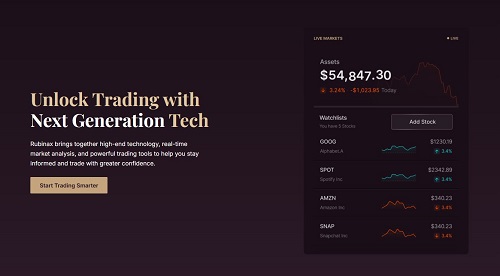
The platform’s engine uses pattern-finding algorithms to constantly track price feeds across currencies, commodities, and big indexes. It’s built to spot classic setups like rising channels or key support levels, meaning there is less manual fiddling required to keep charts current.
For anyone managing a few different positions at once, this automated layer serves as a handy filter to catch significant price shifts early on. It is basically a way to highlight what matters before digging into the details.
This Rubinax.com Review shows how the tech handles the heavy lifting, acting as a preliminary scan of the market architecture. By letting the system do the scanning, it frees up time to focus on the actual strategy rather than constantly searching for the next move.
Spotting Volatility Spikes and Sudden Trend Changes Automatically
When the market hits a sudden rough patch, the platform tracks those sharp rate shifts and flags new momentum patterns in real time. It keeps an eye on statistical volatility over set windows, picking up on odd volume spikes or price jumps before the rest of the crowd catches on.
Getting that early heads-up is the main goal, providing a bit of an edge before a cycle really kicks into gear. The effectiveness of this process is a key part of this Rubinax.com Review, since the whole point of automation is speed.
If the software takes too long to spot a breakout, the info is basically useless for someone trying to manage short-term trades. By running the heavy math right inside the display itself, the system manages to cut down on lag even when the market is moving fast.
How Live Price Alerts and Desktop Dashboard Notifications Keep Traders Informed
The path from a market move to a dashboard alert is kept tight and synced up within the platform’s code. It all starts when the feed catches a change in a volatile asset, pushing that data through a filter designed to spot weird price breaks or major shifts against past norms.
Once a real pattern is confirmed, the system shoots a notification right to the workspace, skipping any unnecessary wait times. This flow keeps the main screen updated without needing a constant manual refresh.
As this Rubinax.com Review points out, managing these alerts well clears up screen clutter, letting an analyst track index moves without feeling overwhelmed. Plus, everything stays linked between the desktop setup and any secondary mobile screens, keeping the data flow consistent across the board.
Practical Application: Simplifying Technical Charts for Clearer Decisions
Advanced data visualization software serves a practical purpose only when it successfully converts intricate mathematical variables into clean, highly readable interface layouts. The system implements an adaptive graphics framework that executes the heavy workload of trendline calculation and support mapping entirely in the background.
Streamlining Information Overload with Organized Analytical Layouts
The platform builds its feature set around how much capital is parked in an account, starting with the Green package at a €3,000 minimum. This gets basic market reviews, an e-book, and webinar access.
Moving up, the €10,000 Bronze tier adds shared layouts and social tools, while the €25,000 Silver level opens up a library of instructional videos. At the higher end, Gold requires €50,000 for a protected trade and personal help, and Platinum jumps to €100,000 for a full trading room and custom setup.
As this Rubinax.com Review lays out, the deeper analytical tools are locked behind these specific deposit milestones. While smaller accounts get standard chart views, the higher rungs unlock deeper insights and dedicated human support. It creates a clear path for retail accounts to follow if they want to access more advanced indicators and infrastructure.
Transitioning from a Free Practice Simulator to Live Asset Feeds
For anyone wanting to test how the software feels before putting real money on the line, there is a practice mode that mirrors the live environment. It runs parallel to real data streams, letting anyone stress-test an automated strategy without the risk. It’s a solid way to see how the dashboard warnings and trend projections actually hold up against live market moves.
This Rubinax.com Review notes that jumping from the demo to live trading is a big step that shouldn’t be rushed. Because the simulator and the live terminal use the exact same visuals, it’s easy to get used to how spreads move under pressure. This kind of consistency is important for making sure any backtesting stays grounded in the reality of the market.
Rubinax Core Strengths and Functional Constraints
An impartial evaluation requires balancing the automated advantages of the interface against the structural limitations that govern the platform.
Operational Strengths and Advantages
- Intuitive Pattern Mapping: The main screen automatically flags new price channels and market trends, which cuts out a lot of the manual grunt work needed for charting.
- Zero Commissions Layer: Using a simple spread-only model makes it much easier to figure out net entry and exit points without needing to account for extra per-lot fees.
- Fully Synced Demo Setup: The practice account mirrors live liquidity pools perfectly, offering a spot to run automated strategies under conditions that actually feel real.
System Parameters and Jurisdictional Frameworks
- Tier-Based Feature Distribution: Advanced tools only unlock once an account reaches certain funding levels, keeping the premium setup reserved for those who scale up their capital.
- Standard Geographic Onboarding Rules: Global rules and local regulations dictate where accounts can be opened, meaning the sign-up process changes depending on where the user is based.
- Web-Reliant Live Feeds: The whole setup runs through a web browser, so there’s nothing to download; however, it does need a solid internet connection to keep up with fast market moves.
Conclusion: Weighing the Long-Term Value of the Platform’s Analytical Tech
Looking at the big picture, the platform does a solid job of using automation to handle the tedious parts of market analysis. As this Rubinax.com Review highlights, the dashboard and alert systems are reliable enough to help track volatile price swings without creating extra hurdles.
It saves a lot of time, provided the user knows how to lean on those automated features instead of doing everything by hand. The catch is that those higher-end analytical tools are tucked away in the more expensive funding tiers.
It means smaller accounts have to figure out if the extra technical muscle is really worth the steeper deposit requirement. At the end of the day, picking the right tier based on strategy needs is the smartest way to make the most out of the system.