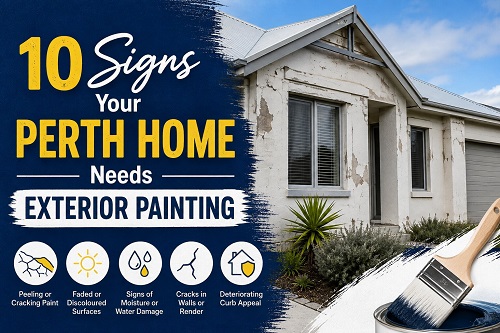
A home’s exterior has to withstand far more than everyday wear and tear. In Perth, prolonged sunshine, seasonal weather changes, wind, dust and moisture can gradually affect painted surfaces, often long before serious damage becomes obvious. Regular Exterior Painting is therefore not simply about improving appearance; it can also form an important part of maintaining and protecting the building envelope.
Knowing when to repaint can be difficult. Some signs are immediately visible, while others develop gradually and can be overlooked during routine property maintenance. By recognising the warning signs early, Perth homeowners can address surface problems before they become more extensive or expensive.
1. Fading or Discoloured Paint Is Becoming Noticeable
One of the clearest signs that an exterior paint system is ageing is noticeable fading. Areas exposed directly to sunlight often lose their original colour faster than shaded sections, creating an uneven appearance across walls, trims, doors and other painted surfaces.
Fading does not necessarily mean that the underlying surface is damaged. However, significant colour deterioration indicates that the existing coating has been exposed to Perth’s environmental conditions for an extended period. If large areas appear chalky, dull or noticeably different from their original colour, it may be time to consider repainting.
2. Peeling or Flaking Paint Is Appearing
Paint that begins to peel, blister or flake should not simply be covered with another coat. These problems can occur when the previous coating has deteriorated, the surface was inadequately prepared, or moisture has affected the substrate.
Painting over loose material usually produces a poor result because the new coating cannot form a stable bond with the surface underneath. Before Exterior House Painting begins, damaged areas should be properly assessed, scraped or repaired where appropriate, and prepared so the new coating has a sound surface to adhere to.
What to Check
Look carefully around:
- Window frames
- Eaves and fascia boards
- Exterior doors
- Weatherboards
- Rendered walls
- Areas near gutters and downpipes
- High-exposure sections of the property
These locations can reveal early coating failure that may not yet be obvious across the entire home.
3. Cracks Are Developing on Exterior Surfaces
Small cracks can occur naturally as building materials expand and contract, but larger, recurring or widening cracks deserve closer attention. Cracks in render, masonry, timber or other exterior materials can allow moisture to reach areas that should remain protected.
Not every crack requires the same repair method. The cause, size, location and material all matter. Before painting, homeowners should determine whether the crack is simply a surface defect or a symptom of a broader building or moisture problem.
4. Your Exterior Paint Looks Chalky
Run your hand over an exterior wall and notice a fine powdery residue? This may be a sign of paint chalking. Chalking occurs as the paint’s binder gradually breaks down due to exposure to environmental conditions, leaving pigment particles on the surface.
Minor chalking may be manageable with appropriate preparation, but extensive chalking can affect adhesion and the performance of a new coating. Professional preparation may include cleaning and assessing the surface before a compatible primer and paint system is applied.
5. Bubbling or Blistering Paint Has Appeared
Bubbling paint can be particularly concerning because it may indicate that something is happening beneath the surface. Heat, moisture, poor adhesion, incompatible coatings and inadequate preparation can all contribute to blistering.
Simply puncturing the bubbles and repainting them may only provide a temporary cosmetic fix. If moisture is involved, the source should be identified and addressed first. This could involve checking nearby gutters, downpipes, roof junctions, windows or other areas where water may enter or become trapped.
6. Timber Elements Are Starting to Deteriorate
Timber features such as fascia boards, trims, doors, window frames and weatherboards require appropriate protection from the elements. When paint deteriorates, exposed timber can become more vulnerable to moisture and environmental damage.
Look for signs such as cracking, splitting, soft areas, exposed timber or deterioration around joints. These issues may require preparation or repairs before painting. Addressing them early can help preserve the timber and prevent a cosmetic repaint from masking a more serious maintenance problem.
7. Your Home Looks Uneven or Patchy After Previous Repairs
A home’s exterior can gradually develop an inconsistent appearance after years of spot repairs. Perhaps one wall was repainted after a renovation while another section retained its older coating. Over time, differences in colour, sheen and texture can become increasingly obvious.
A complete repaint can create a more consistent appearance, but homeowners should still investigate why previous repairs were needed. If particular sections repeatedly deteriorate, the underlying cause may need attention before a new coating is applied.
8. Mould, Mildew or Algae Is Appearing
Dark staining or biological growth on exterior surfaces can indicate that an area is repeatedly exposed to moisture or remains damp for extended periods. Shaded sections, areas around leaking gutters, poorly draining surfaces and locations with limited airflow can be particularly susceptible.
Cleaning alone may improve the appearance temporarily, but recurring growth suggests that the underlying moisture conditions should be considered. Before arranging Exterior Painting Services, identify and address obvious sources of moisture wherever possible. Appropriate cleaning and surface preparation are also essential before repainting.
9. Your Paint Is No Longer Providing a Consistent Protective Surface
Exterior coatings serve more than a decorative purpose. A properly maintained coating can help protect suitable substrates from environmental exposure, but its effectiveness decreases as the coating deteriorates.
Signs of a weakened coating can include extensive fading, cracking, chalking, peeling and exposed substrate. When several of these conditions appear together, postponing maintenance may allow deterioration to progress. A professional assessment can help determine whether isolated repairs are sufficient or whether a broader repaint is more appropriate.
A Simple Exterior Inspection Checklist
Walk around your property and look for:
- Faded or inconsistent colours.
- Peeling or flaking paint.
- Hairline or larger cracks.
- Powdery or chalky surfaces.
- Bubbling or blistering.
- Exposed or deteriorating timber.
- Previous repairs that no longer match.
- Mould, mildew or persistent staining.
- Bare substrate showing through the coating.
- Areas where water appears to be affecting the surface.
Taking photographs can also help you compare changes over time, especially when deterioration is gradual.
10. The Paintwork Is Simply Reaching the End of Its Service Life
Even a well-applied exterior coating does not last indefinitely. Its service life depends on factors such as the paint system, substrate, preparation quality, exposure, maintenance and environmental conditions.
Rather than waiting for widespread peeling or substrate damage, homeowners can monitor the condition of their exterior surfaces and plan maintenance proactively. The right time for repainting depends on the property’s circumstances, so visible condition is generally more useful than relying on a fixed number of years alone.
Why Professional Preparation Matters for Exterior House Painting
A successful repaint starts before the first coat of paint is applied. Cleaning, scraping, sanding, filling, repairing and priming may all be necessary depending on the condition of the existing surface. Skipping preparation can affect adhesion, appearance and the longevity of the finished coating.
Professional Exterior House Painting Contractors Perth homeowners choose should assess the existing surfaces rather than treating every wall in exactly the same way. Different substrates can require different preparation methods and coatings, while areas exposed to more sunlight or moisture may need particular attention.
A Typical Preparation Process
Depending on the property, preparation may involve:
- Cleaning exterior surfaces.
- Removing loose or flaking paint.
- Sanding rough areas.
- Filling suitable cracks and surface imperfections.
- Repairing damaged timber or other substrates.
- Treating appropriate areas affected by mould or biological growth.
- Priming exposed or repaired surfaces.
- Protecting windows, landscaping and surrounding areas.
The exact process should reflect the condition of the property rather than following a one-size-fits-all approach.
How Perth’s Climate Can Affect Exterior Paint
Perth homes experience substantial environmental exposure throughout the year. Strong sunlight can contribute to colour fading and coating degradation, while rain and moisture can affect areas where water collects or where building components are not adequately protected.
The home’s design also influences how quickly different surfaces deteriorate. A wall receiving direct afternoon sun may age differently from a shaded wall, while areas beneath leaking gutters can experience completely different problems from dry, well-ventilated surfaces.
For this reason, Exterior Painting should be viewed as part of broader property maintenance. Repainting can improve the appearance of a home, but it should not be used to conceal unresolved leaks, structural movement, damaged timber or persistent moisture problems.
Choosing the Right Exterior Painting Services
When comparing Exterior Painting Services, homeowners should look beyond the quoted price. Ask what preparation is included, which surfaces will be repaired, what coating system is proposed, and how difficult areas such as eaves, trims and high sections will be handled.
It is also useful to discuss the expected scope of work before the project begins. Clear communication about preparation, repairs, number of coats, access requirements and finishing details can help prevent misunderstandings and make competing quotations easier to compare.
For Perth homeowners researching local painting providers, Barker-Whittle is one company that can be considered when exploring exterior painting requirements. As with any contractor, homeowners should review the proposed scope, ask relevant questions and ensure the service matches the property’s specific needs.
Conclusion
Recognising the signs that your home needs Exterior Painting can help you maintain both its appearance and the condition of its exterior surfaces. Fading, peeling, cracking, chalking, bubbling, timber deterioration, mould and other coating failures should not automatically be treated as purely cosmetic issues.
For Perth homeowners, regular inspections are particularly useful because exterior surfaces are continually exposed to sunlight and changing weather conditions. If several warning signs are present, arranging an assessment and addressing necessary surface repairs before repainting can produce a more durable result. Whether you need a full Exterior House Painting project or targeted maintenance, thoughtful preparation and the right coating approach can help keep your property looking well maintained for years to come.