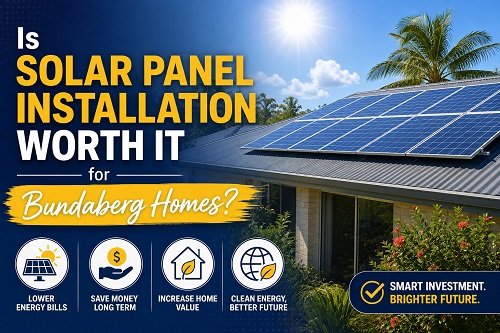
A home solar system can be a significant investment, so it is reasonable to ask whether Solar Panel Installation is actually worthwhile. For homeowners in Bundaberg, the answer depends on several factors, including household electricity consumption, roof orientation, available roof space, system size, electricity rates and how much power the household uses during daylight hours.
Bundaberg’s climate makes solar an option worth investigating, but installing panels should not be based on sunlight alone. A properly designed system needs to match the property’s energy requirements and electrical infrastructure. Understanding the practical considerations can help homeowners make a more informed decision before committing to a system.
Why Solar Panel Installation Can Make Sense in Bundaberg
Solar photovoltaic (PV) panels convert sunlight into electricity that can be used within a home. Any suitable electricity generated by the system can reduce the amount of power a household needs to purchase from the electricity grid, although the actual savings depend on system performance, household consumption, tariffs and other factors.
For many households, the greatest benefit comes from using solar electricity while the panels are generating power. Appliances such as washing machines, dishwashers, pool pumps and air-conditioning systems can consume substantial amounts of electricity. Shifting some of this usage into daylight hours can increase the amount of generated electricity used directly by the household.
Several factors can influence whether a solar system is suitable:
- Household electricity consumption
- Roof size and available installation area
- Roof orientation and pitch
- Shading from trees or nearby structures
- Solar system size
- Inverter capacity
- Electricity tariffs
- Daytime versus evening energy use
- Future household energy requirements
- Whether battery storage is included
Rather than selecting the largest available system automatically, homeowners should consider how much electricity they actually use and when they use it.
How Bundaberg’s Climate Can Affect Solar Performance
Solar panels need sunlight to generate electricity, so local weather conditions naturally influence production. Bundaberg’s generally sunny climate can provide favourable conditions for solar generation, although output varies throughout the year depending on cloud cover, seasonal daylight hours, panel orientation and shading.
Importantly, solar panels do not need constant direct sunlight to generate electricity. They can still produce power under diffuse light on overcast days, although generation is typically lower than during clear, sunny conditions. Temperature, dust, debris and other environmental factors can also affect system performance.
Roof Conditions Matter Too
A roof can look suitable from ground level while presenting installation challenges. Before installing Solar Panels Bundaberg homeowners should consider the roof’s age, condition, available space and exposure to shade.
A professional assessment should consider:
- Roof orientation and pitch.
- Available installation area.
- Existing roof damage or deterioration.
- Shading from trees, buildings and other structures.
- The location of electrical equipment.
- Safe access for installation and future maintenance.
- Whether the roof is likely to need replacement soon.
Installing panels on a roof that requires major repairs shortly afterward can create unnecessary expense. Addressing structural or roofing concerns first may be the more practical approach.
How Much Can Solar Panels Reduce Electricity Costs?
One of the biggest reasons homeowners investigate solar is the possibility of reducing electricity purchases from the grid. However, there is no universal savings figure because every household has a different consumption pattern.
A family that uses significant amounts of electricity during the day may be able to consume a larger portion of its solar generation directly. Conversely, a household that is empty for most of the day may generate substantial electricity while its occupants are away, making battery storage or changes to energy-use habits worth considering.
Simple Example of Solar Self-Consumption
Imagine a household generates electricity during the middle of the day but normally runs its dishwasher and washing machine in the evening. Much of the daytime generation may therefore be exported rather than consumed within the property.
Changing the timing of those appliances can increase direct solar consumption. A simple energy-management strategy might involve:
- Running the washing machine during daylight hours.
- Operating the dishwasher after lunch rather than late at night.
- Using pool pumps during periods of solar generation.
- Pre-cooling the home when appropriate.
- Monitoring electricity consumption through available system software.
These changes do not require additional panels and can improve how effectively an existing system is used.
Do You Need a Solar Battery in Bundaberg?
Solar panels and batteries serve different purposes. Panels generate electricity, while batteries store electricity for later use. A battery can therefore help a household use more of its solar generation after the sun has gone down.
However, adding a battery increases the upfront cost of a solar system. Whether it makes financial sense depends on the household’s electricity consumption, existing solar generation, battery capacity, electricity tariffs and how the battery will be used.
Before investing in storage, homeowners should consider:
- How much solar electricity is currently being exported.
- How much electricity the household uses after sunset.
- Whether electricity prices make stored energy attractive.
- Available battery capacity and usable capacity.
- Warranty terms and expected service life.
- Installation requirements and available space.
- Whether future energy consumption is likely to increase.
For some homes, installing a well-sized solar PV system first and reviewing actual consumption data later may be more appropriate than purchasing every available component immediately.
Choosing the Right Solar System for Your Home
System sizing is one of the most important parts of Solar Panel Installation. A system that is too small may not meet enough of the property’s daytime electricity demand, while an unnecessarily large system may not provide the expected financial benefit depending on export arrangements and household consumption.
An experienced electrical professional can assess historical electricity usage and consider the property’s physical characteristics before recommending a system. This is more reliable than choosing a system size based solely on the number of people living in the home.
Homeowners should also consider future electricity needs. For example, purchasing an electric vehicle, installing a pool, expanding a home, or switching from gas appliances to electric alternatives could significantly change energy consumption over time.
Why Professional Installation Matters
Solar PV systems are electrical installations, so safety and compliance are critical. Electricians in Bundaberg with appropriate solar installation experience can assess the property’s electrical system, install equipment correctly, and ensure the system is suitable for the home’s existing infrastructure.
Professional installation also involves more than attaching panels to a roof. The system includes components such as solar modules, an inverter, mounting equipment, electrical cabling, protection devices and monitoring equipment. Each part needs to work together safely and reliably.
Questions to Ask Before Hiring an Installer
Before choosing an installer, ask:
- Is the installer appropriately licensed for the work?
- What solar equipment is being proposed?
- What warranties apply to the panels, inverter and installation?
- How will shading and roof orientation affect expected generation?
- How will the system be sized?
- What monitoring will be available?
- What maintenance is recommended?
- What happens if a component needs replacing?
Getting clear answers can make it easier to compare different proposals and identify what is actually included in the quoted price.
Common Solar Installation Mistakes to Avoid
Solar technology has become increasingly accessible, but homeowners can still make costly decisions when they focus only on the initial purchase price. The cheapest quotation may not necessarily represent the best long-term value if it involves unsuitable equipment, poor system design, limited support or inadequate consideration of the property’s conditions.
Another common mistake is assuming that solar automatically eliminates electricity bills. A grid-connected home can still purchase electricity when solar generation is insufficient, particularly at night or during periods of low production. Solar should therefore be viewed as a way to change the household’s electricity consumption and purchasing requirements, not as a guarantee of zero bills.
Before proceeding, avoid these mistakes:
- Choosing a system based only on price.
- Ignoring roof shading.
- Failing to check roof condition.
- Assuming all panels and inverters perform identically.
- Installing a system without reviewing household energy consumption.
- Ignoring warranty and after-sales support.
- Assuming a battery is automatically necessary.
- Expecting identical savings across different households.
Careful planning can help homeowners avoid paying for a system that does not suit their actual circumstances.
What Maintenance Do Solar Panels Need?
Solar PV systems generally require less routine maintenance than many mechanical home systems, but they should not simply be forgotten after installation. Panels can accumulate dust, dirt, leaves and other debris, while electrical components may eventually require inspection or replacement.
Monitoring is particularly useful because changes in electricity generation can provide an early indication that something is wrong. If a system suddenly produces considerably less energy under similar weather conditions, the homeowner may want to investigate rather than waiting until the problem becomes obvious on the electricity bill.
Useful maintenance practices include:
- Keep an eye on system generation through the monitoring platform.
- Check for obvious shading changes caused by growing vegetation.
- Keep surrounding areas free from unnecessary obstructions.
- Arrange professional inspection if generation drops unexpectedly.
- Follow the manufacturer’s maintenance recommendations.
- Keep records of installation documents and warranties.
Homeowners should avoid climbing onto roofs or attempting electrical repairs themselves. Solar systems can remain electrically active whenever sunlight reaches the panels, so electrical faults should be handled by qualified professionals.
Is Solar Panel Installation Worth It for Your Bundaberg Home?
For many homeowners, solar is worth investigating because it can generate electricity on-site and potentially reduce reliance on grid-supplied power. However, the financial and practical benefits depend on the individual property rather than the location alone.
The strongest case for solar generally comes from a combination of suitable roof conditions, reasonable solar exposure, meaningful electricity consumption and a properly sized system. Homeowners should also consider their expected time at the property, future energy requirements and available budget.
For those considering a local provider, Next Door Electrical is one option Bundaberg homeowners can research when exploring solar and electrical services. As with any significant home improvement, it is sensible to compare proposals, verify credentials, understand warranties and make sure the recommended system is based on the property’s actual requirements.
Conclusion
So, is Solar Panel Installation worth it for Bundaberg homes? It can be, particularly when a system is correctly sized, professionally installed and matched to the household’s electricity consumption. Bundaberg’s solar conditions make PV technology worth considering, but the quality of the system design and the property’s individual characteristics matter just as much as the amount of sunlight available.
Before making a decision, assess your roof, review your electricity usage, consider when your household consumes the most power and compare suitable installation options. Speaking with qualified Electricians in Bundaberg can also help clarify the technical requirements and identify a system that fits your home’s current and future energy needs.