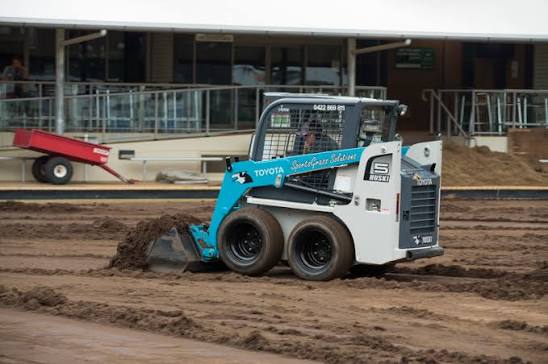
Hydraulics are the muscle of a skid steer loader. Every lift, tilt, steer and attachment function runs through the hydraulic system, so its condition sets the ceiling on what the machine can do. A loader with tired hydraulics is slower through the cycle, less precise under load and more likely to stop work at the worst possible time. Keeping the system in good order is one of the most direct ways to protect both productivity and resale value.
Most hydraulic problems build up gradually and give warning signs long before they become failures. Contamination, heat and pressure loss account for the majority of issues, and all three respond to routine attention. The same fundamentals apply right across the compact loader category, from a skid steer loader working attachments on a tight residential block to a large skid steer loader feeding a crusher.
This guide covers the practical maintenance that keeps skid steer loader hydraulics performing, and where a skid steer loader’s demands differ from a smaller machine’s.
Why hydraulic condition decides performance
A hydraulic system moves power by moving fluid under pressure. When the fluid is clean, at the right level and at operating temperature, the pump, valves and cylinders all work within their design range. When it is contaminated, overheated or low, every component in the circuit works harder and wears faster. Cylinder seals, pump internals and control valves are all sensitive to fluid condition, and they are among the more expensive parts to replace.
Peak performance, then, is less about any single service task and more about keeping the fluid and the circuit in the condition the machine was designed around.
Keep contamination out of the system
Contamination is the leading cause of hydraulic wear. Fine particles circulating in the fluid act like a grinding paste through pumps and valves, and water ingress breaks down the oil’s protective properties. The defences are straightforward but need discipline.
Change hydraulic filters at the intervals the manufacturer specifies, and more often in dusty or wet conditions. Keep breather caps and fill points clean before opening them, since most contamination enters during top-ups and servicing rather than in operation. Wipe cylinder rods and check wiper seals, because a failed rod seal draws grit straight into the system. This is as true on a skid steer loader running a mulcher as it is on a skid steer loader shifting aggregate, and the auxiliary circuit is often where contamination first gets in.
Manage heat and fluid condition
Heat is the second enemy. Hydraulic oil that runs consistently hot breaks down faster, loses viscosity and stops protecting the components it lubricates. On a skid steer loader working long cycles in summer, or running high-draw attachments, oil temperature can climb well above the ideal band.
Keep the oil cooler and radiator clean and clear of debris, since a blocked cooler is a common and avoidable cause of overheating. Confirm the fluid grade suits the operating temperature range, and monitor the temperature gauge for readings that sit higher than normal. A machine that runs hot day after day is telling the operator something before it fails. A hard-working skid steer loader on continuous attachment work faces the same heat load in a smaller package, so the habit of watching oil temperature carries across machine sizes.
Match flow and pressure to the work
Skid steer loaders cover a wide range of tasks, and many run auxiliary attachments as well as the main lift and tilt functions. Running an attachment that demands more flow than the circuit is set up to deliver overloads the pump and generates excess heat. Running one that needs less can be fine, but the operator should know the difference.
Operators stepping up from a skid steer loader to a skid steer loader often carry over attachment habits, and it is worth confirming that flow and pressure ratings match the larger machine’s circuit rather than assuming they transfer. Matching the attachment to the hydraulic specification protects the system and gets the best performance from both.
Build checks into the daily routine
The most effective hydraulic maintenance is the quick daily habit rather than the occasional deep service. Before the shift, check fluid level, look for leaks at hoses and fittings, and note any change in how the controls respond. Slower cylinder movement, drift under load or unusual noise from the pump are early signals worth acting on.
Logging these observations builds a picture over time, so a gradual change is caught while it is still a maintenance item rather than a breakdown. A fleet that runs both a skid steer loader and larger skid steer loaders benefits from applying the same daily discipline across every machine, since the failure modes are shared even when the scale is not.
A maintenance-minded approach pays off
Hydraulic performance is not something a loader either has or does not have. It is maintained, day by day, through clean fluid, controlled heat and attention to how the machine behaves. Operators who build these habits get more productive hours, more predictable machines and stronger residual value at resale.
For owners who want that maintenance backed by expert support, Toyota Takeuchi provides genuine parts and access to the national service network of Toyota Material Handling Australia, including mobile service to site. Well-maintained hydraulics keep a loader working on the jobs that pay, whatever its size.