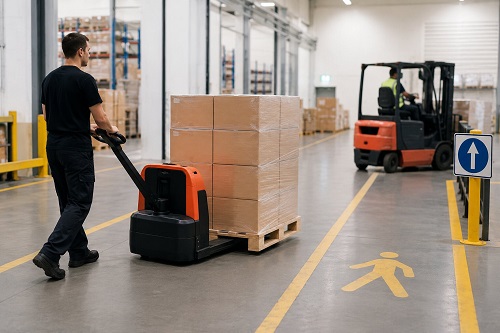
Introducing electric pallet jacks for sale into a warehouse that previously ran manual units changes the traffic dynamics on the floor. Electric units are faster, more manoeuvrable, and are used more frequently because the reduced physical effort of operation means operators are willing to move loads they might have deferred on a manual machine. Without deliberate traffic management, the result is more equipment movement in the same space with the same traffic rules written for a lower-intensity operation.
Why traffic management changes when you add electric units
The fundamental change is speed and frequency. An electric pallet jack for sale in regular operation covers more ground per shift than a manual unit doing the same task. More ground covered means more intersection crossings, more aisle entries, more loading dock approaches, and more pedestrian interaction points per hour.
Traffic rules calibrated for manual operation, informal conventions about which way to travel in an aisle, who has right of way at an intersection, and how close to the dock edge is acceptable, need to be reviewed when the fleet upgrades to electric. The informal practices that worked at lower speeds and lower movement frequency need to become formal, communicated rules at higher intensity.
Zoning the floor for traffic type
One of the most effective structural changes an operations manager can make when deploying electric pallet jacks for sale is to zone the warehouse floor by traffic type and intensity.
Zones to consider:
- High-speed travel lanes. Dedicated lanes along major aisles where electric units travel between zones at their efficient travel speed, with pedestrian crossing points marked and managed.
- Slow zones. Areas around loading docks, staging areas, charging bays, and pedestrian work areas where speed is restricted regardless of equipment type.
- Pedestrian-only zones. Areas where equipment access is managed by time window or where physical barriers separate foot traffic from equipment movement.
- Intersection management. Marked pedestrian crossings at aisle intersections, with clear right-of-way conventions for equipment and pedestrians.
Zones do not require infrastructure investment to begin. They can be established with floor marking, signage, and clear communication of the new conventions before any structural changes are considered.
Scheduling traffic to manage peaks
Electric pallet jacks for sale in high-throughput environments generate traffic peaks when multiple operators are moving loads simultaneously toward the same destination, typically the loading dock or a staging area. These peaks create queuing, which reduces the efficiency gain the electric fleet was intended to deliver.
Scheduling traffic means staggering movement tasks so that the peak coincides with available dock capacity rather than creating a queue. In practice, this means operations managers reviewing the sequencing of pick and replenishment tasks, the timing of dock availability, and the allocation of machines to operators across the shift, rather than allowing all operators to converge on the dock at the same time.
Mixed-fleet traffic management
Many operations run electric pallet jacks for sale alongside counterbalance forklifts, reach trucks, or walkie stackers. Each machine type has different speed, turning radius, and visibility characteristics. Traffic rules written for one machine type may not suit another.
In a mixed-equipment environment, the traffic management approach should account for the least capable machine in each dimension. Speed limits set for the slowest machine type, intersection clearances designed for the widest turning radius, and pedestrian separation rules applied consistently across all equipment types create a baseline that works for the full fleet.
When a new machine type is introduced, reviewing the traffic management framework for the updated mix is a routine step that prevents the introduction of the new equipment from creating a gap between the rules and the reality on the floor.
Charging bay traffic
Charging bays for electric pallet jacks for sale are a specific traffic management point. Machines entering and leaving a charging bay create a predictable movement pattern that, if not managed, creates congestion at shift start and end when multiple machines are being connected or collected simultaneously.
Staggering charging bay access, with clear entry and exit routes that do not conflict with main warehouse traffic lanes, reduces the congestion that otherwise occurs precisely when the floor is most active.
Toyota Material Handling Australia can provide advice on fleet configuration and traffic management planning as part of a broader electric pallet jack deployment review.