Clean, safe drinking water is something every homeowner values. Installing a Water Filtration system is an effective way to improve water quality by reducing impurities, sediment, chlorine, and other contaminants before they reach your taps. Whether you’re concerned about taste, odour, or the long-term health of your plumbing fixtures, understanding the installation process helps you make informed decisions.
Many homeowners are surprised to learn that installing a filtration system is usually straightforward when completed by an experienced professional. From assessing your property’s plumbing to testing the finished installation, each step is designed to ensure your new system operates efficiently and delivers cleaner water throughout your home.
Understanding Water Filtration Systems
Not all filtration systems are designed for the same purpose. Some units filter drinking water at a single tap, while others treat every water outlet in the home through a whole-house filtration system.
The right solution depends on your water quality concerns, household size, and budget. A qualified Plumber Perth homeowners trust can assess your water supply and recommend a filtration system suited to your property’s needs.
Different systems are designed to remove different contaminants. Some focus on sediment and rust, while others reduce chlorine, heavy metals, bacteria, or unpleasant tastes and odours. Understanding these differences helps ensure you select a system that meets your family’s expectations.
Common Types of Water Filtration Systems
Popular options include:
- Whole-house filtration systems
- Under-sink water filters
- Reverse osmosis systems
- Carbon filtration systems
- UV purification units
- Sediment filters
- Combination filtration systems
Each option has advantages depending on your water source and household requirements.
What Happens Before Installation?
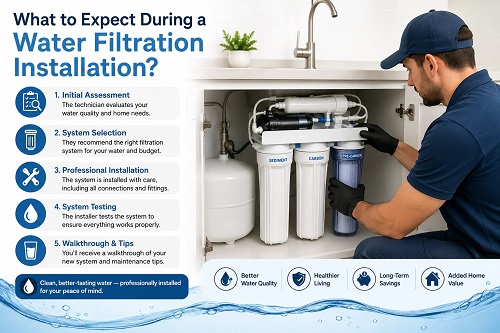
Before installation begins, your plumber will inspect your existing plumbing system and determine the best location for the filtration unit. They will also identify the main water supply line and ensure there’s enough space to install the equipment safely.
During this assessment, they may discuss your household’s daily water usage, existing plumbing layout, and any concerns about water quality. This information helps determine the most suitable Home water filtration system for your property.
If necessary, the plumber may also recommend replacing ageing pipework or installing additional valves to improve system performance and simplify future maintenance.
The Water Filtration Installation Process
The installation itself usually begins by shutting off the home’s main water supply. This allows the plumber to safely connect the filtration system without water flowing through the pipes during installation.
Once the system is connected, fittings and pipework are carefully secured to prevent leaks. After installation, the water supply is restored gradually while the plumber checks every connection to ensure the system is operating correctly.
Typical Installation Steps
A professional installation often includes:
- Inspecting the plumbing system
- Selecting the installation location
- Turning off the water supply
- Installing mounting brackets
- Connecting the filtration unit
- Installing isolation valves
- Testing for leaks
- Flushing the filters
- Checking water pressure
- Explaining system operation to the homeowner
These steps help ensure the filtration system performs safely and efficiently from day one.
Testing the System After Installation
After installation, several tests are completed before the project is considered finished. The plumber will inspect every fitting for leaks and confirm that water pressure remains within the manufacturer’s recommended range.
The filters are then flushed to remove carbon dust or manufacturing residue before the water is ready for use. Depending on the filtration system, the plumber may also perform water quality testing to verify that the unit is working correctly.
Testing provides peace of mind that your investment is operating exactly as intended.
Maintaining Your Water Filtration System
Like any household appliance, filtration systems require routine maintenance to continue delivering clean water. Most filters need replacement every six to twelve months, although this varies depending on water quality and household usage.
Ignoring filter replacement schedules can reduce water flow and allow contaminants to pass through the system. Regular servicing helps maintain water quality while extending the life of your filtration equipment.
Maintenance Tips
To keep your filtration system performing well:
- Replace cartridges according to the manufacturer’s recommendations.
- Schedule regular professional inspections.
- Monitor water pressure for sudden changes.
- Watch for unusual tastes or odours.
- Check for leaks around the filtration unit.
- Keep service records for future maintenance.
Routine maintenance helps maximise both performance and longevity.
Benefits of Installing a Home Water Filtration System
A professionally installed Water Filtration System Perth homeowners rely on offers several practical advantages beyond improving drinking water.
Some of the key benefits include:
- Better tasting water
- Reduced chlorine odours
- Cleaner drinking water
- Less sediment entering appliances
- Reduced mineral build-up in plumbing fixtures
- Improved lifespan of household appliances
- Reduced reliance on bottled water
- Greater confidence in your home’s water quality
Many homeowners also appreciate the environmental benefits of reducing plastic waste associated with bottled water.
Choosing the Right Plumber for Installation
Installing a filtration system requires knowledge of plumbing regulations, water pressure management, and correct pipe connections. Choosing an experienced professional helps ensure the installation is completed safely and complies with local plumbing standards.
When comparing providers, look for:
- Licensed and insured plumbers
- Experience with filtration systems
- Positive customer reviews
- Transparent pricing
- Quality workmanship guarantees
- Ongoing maintenance services
Selecting an experienced installer reduces the likelihood of future plumbing issues and ensures your system performs as expected.
Conclusion
Installing a Water Filtration system is an excellent investment for homeowners looking to improve water quality, protect plumbing fixtures, and enjoy cleaner drinking water. Understanding each stage of the installation process—from the initial inspection through testing and ongoing maintenance—helps you feel confident about the upgrade.
Whether you’re considering a whole-house filtration solution or a point-of-use system, working with an experienced plumbing professional ensures your installation is completed correctly and efficiently. Companies like ASAP Trades can provide expert advice, quality workmanship, and ongoing support to help homeowners enjoy reliable, high-quality filtered water for years to come.