A two seater is a statement about occupancy, not a measurement. Two frames carrying the same name can differ by a hand span in advertised width and by more than that in the space left between the arms. Ranges of 2 seater sofas usually hold several frames of quite different proportions, which is why a shortlist built from thumbnails collapses the moment dimensions are put side by side. The number in the name counts places to sit, and everything deciding whether two adults sit there willingly is in the specification underneath.
Reading that specification takes about a minute per model once you know which five figures carry the decision.
Frame Width and Arm Style Decide What Two Seater Sofas Give You
Advertised width is the figure retailers lead with and the one that matters least once the piece is in the room. Subtract the two arms and what remains is the seat, and arms run from a slim track profile to a rolled shape as wide as a cushion. Two frames of identical footprint can therefore offer noticeably different room between them. The cushion layout settles the rest, because a single bench cushion leaves the pair free to sit wherever they like, while two cushions draw a boundary most people obey. Neither arrangement is better in the abstract, though one seats two adults more generously and the other holds its shape more evenly. Deciding which you want before browsing saves the whole exercise from starting again a week later.
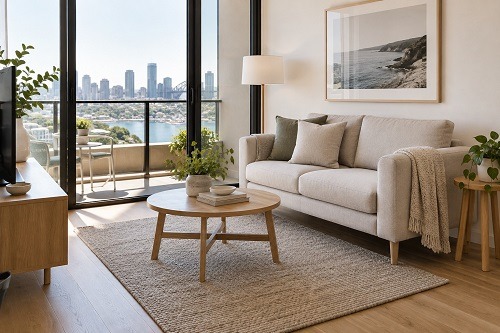
Seat depth is the figure that decides posture. A deep seat suits people who fold their legs up and lean back, and it leaves shorter sitters with their feet off the floor or their spine unsupported. A shallower seat keeps the back against the cushion and makes standing up easier, which counts for more in a room that adjoins a dining table than in a television room. Back height works with it, since a low back looks lighter in a small space and gives nothing above the shoulder blades.
Seat height is worth measuring against the chairs already in the room. A sofa sitting much lower than everything around it changes how a conversation works, and it is the dimension people notice last and mention first.
- Advertised width including the arms, which is what has to fit the wall.
- Internal seat width between the arms, which is what two people actually share.
- Seat depth from the front edge to the back cushion, measured with the cushions in place.
- Seat height from the floor, compared with the chairs and the table nearby.
- Overall depth including the back cushions, which governs the walkway in front of the piece.
What a 2 Seater Sofas Sale Changes and What It Does Not
Discounts compress decisions. A sale on 2 seater sofas changes the price of a frame and nothing else about it, so the comparison that made sense a week earlier is still the comparison to make. The risk is drift, where a model that sat third on the list moves to first because its discount runs deeper, even though it lost on seat depth for a reason that has not changed. Write the specification down before the prices arrive and the drift becomes visible. What deserves fresh attention during a sale is not the frame but the terms wrapped around it.
Floor stock and made to order pieces behave differently under a discount. Stock already built ships sooner and comes in whatever fabric it was made in, while a made to order frame in the fabric you actually want may carry a lead time measured in weeks. Discounted fabrics are often a subset of the full range, so the price on screen can belong to a shade you would not have chosen. Clearance pieces sometimes carry conditions that standard orders do not, including limits on changes after the order is placed. Reading those conditions takes less time than choosing between two neutrals. The saving is real either way, but it is a saving on a specific frame in a specific fabric arriving on a specific date.
Like for like is harder than it looks in a discount period, because ranges rarely come down evenly. A frame offered with a chaise attachment can sit beside its plain version at a similar price, and the two are not the same purchase at all. Display stock carries its own history as well, since a piece that stood on a shop floor for a season has been sat on by strangers and is usually priced with that in mind. Neither fact is a reason to walk away, and both are reasons to ask what exactly is being discounted before the card comes out.
A sofa bought at a discount in the wrong depth is not a saving.
Where Compact 2 Seater Sofas Earn Their Footprint
A compact frame solves a problem that larger sofas create in small rooms, and the problem is rarely the wall. It is the floor around the sofa. A room reads as usable when someone can pass the coffee table without turning sideways and open a door fully, and a slimmer frame buys both without moving anything else. Legs that lift the frame clear of the floor add to the effect, since visible floor under a sofa makes the room look deeper than it measures.
Weight counts for more in a small room than most people expect. A frame with slim arms and raised legs can be pulled out by one person to clean behind it or to take a rug up, while a heavier piece stays exactly where the delivery crew set it down and the rest of the room is arranged around that decision.
The same frames also do work that has nothing to do with a shortage of space. A pair facing each other across a rug turns a long room into a place where people talk rather than watch. One set at right angles to a larger sofa closes a corner without blocking the light from a window. In a bedroom or a study a smaller frame takes the role two armchairs used to take, for less width and one less object to move. Renters gain something else again, because a piece that fits an awkward apartment usually fits the next one too.
The order of the decision is what saves the afternoon. Measure the wall, the walkway and the way you sit, then look only at frames that satisfy all three, and the shortlist writes itself. Choosing the sofa first and measuring later is how a room ends up with a beautiful piece nobody can walk around.
- A narrow living room where a three seater would leave a corridor rather than a walkway.
- A second sofa angled to face the main one, closing a seating group without crowding it.
- A study or bedroom corner that needs somewhere to read and not another armchair.
- A rental where the room shape changes every couple of years and the furniture has to survive the change.