Planning a kitchen renovation is a long, layered process. The right designer makes it feel manageable. The wrong one can turn it into the most stressful project of your year. Here’s what to ask before you sign anything.
A new kitchen sits in an interesting category of household project. It’s not a piece of furniture you can return if you change your mind. It’s not a paint colour you can repaint next weekend. It’s joinery and plumbing and electrical and stone, all built into the bones of the house, sized for that house specifically, intended to last 15 to 25 years. The choices made in the design stage are the choices the household lives with for a long time.
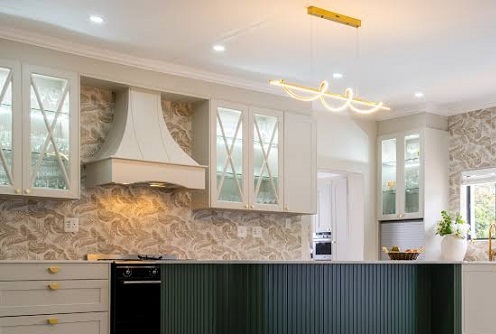
That’s why the designer matters as much as the materials. The designer translates the household’s actual life, how the family cooks, who hosts, who unpacks the dishwasher, into a layout that works for those people specifically. A clever layout, well-built, beats an expensive layout that nobody enjoys using.
6 Questions to Ask Before You Choose a Kitchen Designer
If you’re in the early stages of planning, the conversations with potential kitchen designers Melbourne homeowners are spoiled for. There are hundreds. The six questions below help separate the ones who’ll genuinely add value from the ones who treat every kitchen as a variation on a template they’ve already drawn.
Do You Design and Manufacture, or Just Design?
This is the structural question, and it shapes everything else.
Some Melbourne kitchen designers are independent designers who draw the plans and hand them off to a cabinetmaker. Others are full-service businesses that design, manufacture, and install in-house. There’s no universal right answer, but it changes what you’re buying.
Design-only studios can be wonderful for purely aesthetic work, but the handoff to a manufacturer is where mistakes happen. Drawings get reinterpreted. Materials get substituted.
Timelines slip because the designer and the cabinetmaker don’t sit at the same table. Full-service businesses keep the design intent intact from sketch to install, but they’re tied to their own manufacturing capabilities.
Ask the designer directly: who builds it? If the answer is “we outsource to a few different cabinetmakers depending on the job”, that’s not necessarily bad, but it does mean you should ask to see examples of completed work, not just renders.
How Long is Your Current Manufacturing Lead Time?
A custom kitchen in Melbourne typically takes 8 to 12 weeks to manufacture once the design is signed off and deposit paid. That’s manufacturing alone, before installation, before stone templating, before any of the other trades. If you want the kitchen done by Christmas, the deposit usually needs to be in around late August. If a designer is quoting you a four-week turnaround, they’re either flat-out wrong, working from existing stock, or about to deeply disappoint you.
Ask for the realistic lead time in writing. Reputable Melbourne Melbourne kitchen renovations businesses are upfront about it because their backlog is part of their credibility. Companies that say “oh, we can fit you in next month” are often companies you don’t want fitting you in.
What materials do you use, and which ones do you NOT use?
The honest answer to this question reveals a lot.
Some materials are non-negotiable in Australian residential kitchens now. Engineered stone benchtops have moved entirely to silica-free or low-silica formulations, by law, in response to the silicosis crisis affecting stonemasons. Any kitchen designer who isn’t quoting silica-safe stone is either out of date or cutting corners. Ask the question and listen for a clear, informed answer.
Hardware is another revealing area. Hinges and drawer runners are the parts of the kitchen that move every day for decades. German-made hinges (Blum, Hettich) cost more than no-name alternatives and last vastly longer. Cabinet boxes built from Australian-made board carry better moisture tolerance than thinner imported alternatives. If a designer’s quote looks suspiciously low, this is often where the saving has come from.
Worth also asking what they don’t do. Vinyl wrap on cabinetry, for example, looks fine in year one and peels around heat and steam by year five. A designer who specifies two-pack painted finishes over vinyl wrap is making a choice in the customer’s favour.
Do you coordinate the trades, or do I project-manage that myself?
A kitchen renovation involves a stack of trades. Plumber, electrician, sometimes a tiler or splashback installer, sometimes a builder if walls are moving, sometimes a stonemason for templating and install. The question is who manages all of them.
Some designers hand the plans to the homeowner and say “good luck, here’s a list of trades we recommend”. Others run the whole project, coordinating timing, warranting the work done by the subcontracted trades, and giving the homeowner one number to call when something goes wrong. The second model costs more in design-phase visibility but usually less in stress and rework.
If a designer doesn’t run the trades, ask exactly what they do and don’t take responsibility for if a tile installer damages a freshly installed cabinet, or a plumber’s tap connection leaks behind a benchtop six months later.
Do you have a showroom, and can I visit?
Renders are lovely. So are Pinterest boards. Neither of them feel like a finished door profile under your hand, or a drawer pull at the correct height, or a stone sample under your kitchen’s actual lighting at home.
Any kitchen designer worth working with should have a showroom (or be willing to visit your home with physical samples) and should encourage you to spend time in it before signing off. Touching the materials in person is where homeowners discover they actually prefer matte over gloss, or that the timber tone they loved online clashes with their flooring in person.
Worth also asking whether the designer will visit your home before the design is finalised. For an existing-home renovation, this is normal practice. The designer measures the space, sees the light, understands the flow with the rest of the house. If the designer wants to design everything from a floor plan you email through, that’s a flag.
What does your warranty cover, and what’s excluded?
Almost every Melbourne kitchen company quotes a warranty. The differences are in the detail.
Look for written cover on the cabinetry itself (10 years is a reasonable expectation for custom work) and lifetime cover on the moving parts (hinges, drawer runners, soft-close mechanisms). Weak warranties cover the box but exclude the parts that actually fail. Ask specifically what happens if a drawer runner fails in year eight, and whether the warranty extends to work done by the trades the designer coordinated.
The answers don’t all need to be perfect. A small designer with a five-year warranty may be a better choice than a chain with a meaningless ten-year warranty. What matters is that the answer is specific, written, and that you understand exactly what is and isn’t covered.